
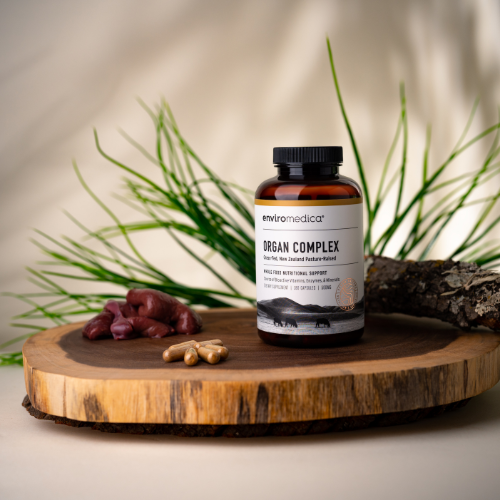










Why collagen isn't one-size-fits-all
In the world of wellness, collagen is everywhere. From powders to pills to protein bars, it’s touted as the key to glowing skin, joint support, and overall vitality. But not all collagen is created equal, and not all supplements deliver what your body actually needs. Before you reach for the first product that promises firm skin or flexible joints, here are four essential things to know.
1. Collagen Type Matters
There are many types of collagen in the human body, but types I, II, and III are the most talked about in supplements.
- Type I: Found in skin, tendons, bones.
- Type II: Found in cartilage.
- Type III: Found in skin, lungs, intestinal walls.
Most collagen supplements on the market focus on type I or III; those tied to beauty benefits like skin elasticity. But for structural support, especially for joint, spine, and connective tissue health, type II collagen is the foundational form.
Our ancestors consumed the full spectrum of collagen by eating whole animal parts, including cartilage, tendons, and bone, not just muscle meat. Today, most modern diets leave that behind.
Why it matters: If you’re looking to support joint health or mobility, a type I collagen supplement won’t cut it. Look for type II collagen, which supports cartilage integrity and healthy immune response around joints.1
2. Not All Collagen Is Bioavailable
Bioavailability is how well your body absorbs and uses a nutrient. Many collagen supplements on the market are heavily processed or hydrolyzed, making the collagen easier to absorb, but not always more effective.
In some cases, native collagen offers more targeted benefits because it interacts directly with immune cells in the gut and supports the body’s natural repair processes without being broken down entirely.2
Why it matters: Hydrolyzed collagen peptides are widely available, but not always targeted. Native type II collagen works through a different mechanism that may benefit joint health at much lower doses.
3. The Source of Collagen Reflects the Integrity of the Product
Collagen can come from bovine, marine, poultry, or even porcine sources. But where and how those animals were raised makes a big difference.
At Enviromedica, our collagen is sourced exclusively from grass-fed, pasture-raised New Zealand bovine, with no hormones or antibiotics. This matters for two reasons:
- Nutrient integrity: Pasture-raised animals produce collagen that reflects a more natural amino acid profile.
- Environmental alignment: Ethical sourcing respects the broader health of the land, animals, and consumer.
Why it matters: High-quality sourcing isn’t just a bonus. It’s part of what makes a collagen supplement effective, clean, and aligned with ancestral nutrition principles.
4. Whole-Food Collagen Delivers More Than Collagen
Your body needs more than just collagen to build and maintain healthy tissue. It also needs cofactors like vitamin C, magnesium, and trace minerals to synthesize new collagen.
Whole-food supplements that preserve natural structure, like cartilage-based collagen from bovine tracheal and scapula tissue, deliver more than isolated peptides. They contain naturally occurring compounds like chondroitin sulfate and hyaluronic acid that support joint lubrication and cushioning.3
Why it matters: Cartilage collagen isn’t just about the collagen. It’s a whole matrix of support for joints, connective tissue, and movement.
Why Enviromedica Cartilage Collagen Stands Apart
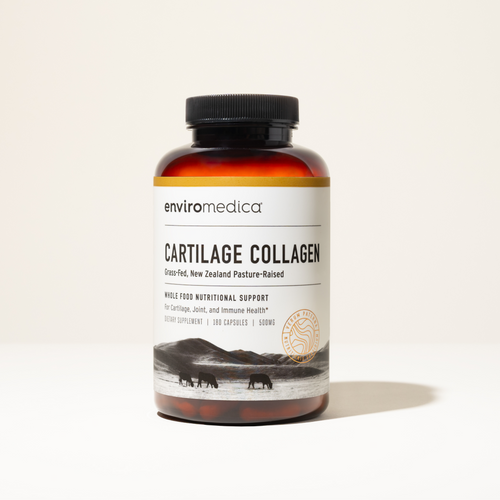
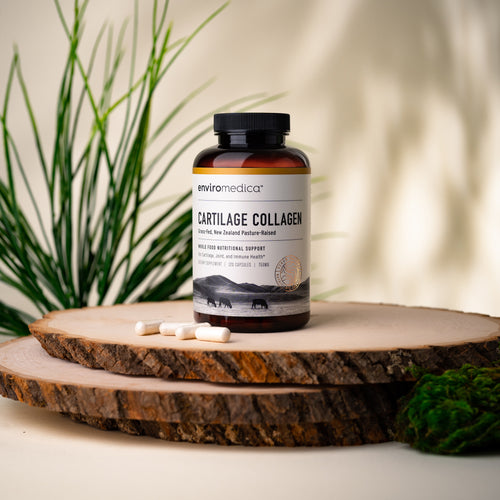
Our Cartilage Collagen is a whole-food source of type II collagen made from the tracheal and scapula tissue of pasture-raised bovine, delivering a complete, native matrix that supports healthy joints and connective tissues.
FAQs
Q: Is collagen just for skin health?
A: No. While type I collagen supports skin, type II collagen supports cartilage and joint function. Different types have different benefits.
Q: What makes native collagen different?
A: Native collagen retains its natural structure, which means it works differently in the body, primarily through immune-mediated pathways that help protect joint tissue.4
Q: Can I take collagen with other supplements?
A: Yes. Collagen pairs well with minerals like magnesium and nutrients like vitamin C, which are needed for collagen synthesis.
Q: When will I notice a difference?
A: Many people begin noticing joint comfort and flexibility improvements within 4–8 weeks, though results vary.

References
- 1. Lugo, J. P., Saiyed, Z. M., & Lau, F. C. (2013). Undenatured type II collagen (UC-II) for joint support: A review. Journal of the International Society of Sports Nutrition, 10(1), 48.
- 2.Trentham, D. E., Dynesius-Trentham, R. A., Orav, E. J., Combitchi, D., Lorenzo, C., Sewell, K. L., ... & Kang, A. H. (1993). Effects of oral administration of type II collagen on rheumatoid arthritis. Science, 261(5129), 1727–1730.
- 3.Kelly, G. S. (1998). The role of glucosamine sulfate and chondroitin sulfates in the treatment of degenerative joint disease. Alternative Medicine Review, 3(1), 27‒39.
- 4.Crowley, D. C., Lau, F. C., Sharma, P., Evans, M., Guthrie, N., Bagchi, M., ... & Bagchi, D. (2009). Safety and efficacy of undenatured type II collagen in the treatment of osteoarthritis of the knee: a clinical trial. International Journal of Medical Sciences, 6(6), 312.
Want to Learn More?
Explore our full learning library on ancestral nutrition, collagen science, and how to rewild your gut and body naturally.


