









Why you crash at 2PM (and what your gut has to do with it)
By mid-afternoon, it hits.
Your focus fades.
Your motivation dips.
Your brain feels slower than it did just a few hours earlier.
For many people, the instinctive explanation is simple: I didn’t sleep enough. Or I need more coffee.
But if the 2 p.m. slump shows up day after day (even after a decent night’s sleep) it’s a signal worth paying attention to.
Because the real driver of afternoon energy may not be your coffee, your sleep schedule, or even your workload.
It may be your gut.
More specifically, it may be the ecosystem of microbes that regulate how your body extracts energy, stabilizes blood sugar, and communicates with your nervous system throughout the day.
When this ecosystem functions well, energy flows steadily. When it doesn’t, crashes become predictable. And for millions of people living in modern environments, the afternoon slump is often a microbiome signal, not a motivation problem.
The daily energy curve your body was designed for
Your body operates on circadian rhythms, biological cycles that coordinate sleep, metabolism, hormone release, and alertness across a 24-hour period.1
These rhythms influence when you feel naturally alert and when your body shifts into recovery mode.
For most people, energy follows a pattern:
- Morning rise in alertness
- Late-morning peak performance
- A mild early-afternoon dip
- Evening stabilization before sleep
A small midday dip is normal. But when the slump becomes severe (brain fog, cravings, irritability, or exhaustion) it usually points to metabolic instability earlier in the day.
And that instability often begins in the gut.
Your gut microbiome is an energy organ
The gut microbiome, the trillions of bacteria living in your digestive tract, does far more than help digest food. It acts as a metabolic interface between your diet and your cells.
Gut microbes help:
- Break down dietary fiber
- Produce short-chain fatty acids (SCFAs) that support metabolism
- Influence blood glucose regulation
- Communicate with the nervous system through the gut–brain axis2
In other words, your microbiome helps determine how efficiently you convert food into usable energy.
When microbial diversity is strong, this system works smoothly. When diversity is reduced, or when key microbial functions are missing, energy regulation can become less stable.3
The instability can show up hours after you eat. Including right around 2 p.m.
Your gut isn't just digesting food, it's helping decide how steadily your energy flows throughout the day.
What actually causes the afternoon energy crash
The classic afternoon slump is usually driven by one or more of the following mechanisms.
1. Blood Sugar Swings
Rapid spikes and drops in blood glucose can trigger fatigue, cravings, and mental fog.
Certain gut microbes help regulate how carbohydrates are processed and absorbed. When microbial balance is disrupted, glucose responses to food can become more variable.4
This means two people can eat the same meal, but experience very different energy outcomes. Your microbiome partly determines which one you are.
2. Reduced Short-Chain Fatty Acid Production
When beneficial microbes ferment dietary fiber, they produce compounds called short-chain fatty acids, including butyrate, acetate, and propionate.
These molecules play roles in metabolic regulation, inflammation balance, and energy signaling.5
Lower microbial diversity can reduce SCFA production, which may influence energy stability and metabolic resilience throughout the day.
3. Gut–Brain Communication
Your gut and brain communicate continuously through neural, hormonal, and immune pathways.2 This gut–brain axis helps regulate mood, cognition, and energy perception.
When microbial balance is disrupted, signaling along this axis can shift, sometimes contributing to fatigue, brain fog, or reduced focus.
The afternoon slump isn’t always about calories. Sometimes it’s about communication breakdown.
Why modern life makes the 2PM slump worse
If the microbiome plays such an important role in energy regulation, why do so many people struggle with daily crashes? Because modern environments dramatically changed the microbial inputs humans evolved with.
For most of human history, microbial diversity came from:
- Soil contact
- Outdoor environments
- Wild and fermented foods
- Untreated water sources
These exposures continually seeded the gut with new microbial strains and supported ecosystem diversity. Modern life removed many of these inputs.
Antibiotic use, ultra-processed foods, sanitization, and indoor lifestyles have all been associated with reductions in microbial diversity in industrialized populations.6
When microbial ecosystems narrow, metabolic resilience can narrow with them. Which means energy stability becomes harder to maintain.
When microbial diversity shrinks, metabolic resilience often shrinks with it.
Why coffee often makes the slump worse
When energy dips, caffeine becomes the default solution. But caffeine doesn’t fix the underlying problem, it masks it.
Caffeine works primarily by blocking adenosine receptors in the brain, temporarily reducing the sensation of fatigue.7
This can create a short-term alertness boost. But if the underlying issue is unstable energy metabolism, the boost is often followed by another crash later in the day.
Which leads to another coffee. And another cycle.
The goal isn’t to eliminate coffee entirely. It’s to build a metabolic foundation where caffeine becomes optional rather than necessary.
The ancestral clue: energy used to be more stable
Anthropological and ecological evidence suggests that ancestral human populations experienced more stable daily energy patterns than many people today.
Why? Because their microbiomes were likely far more diverse.
Traditional lifestyles involve constant exposure to environmental microbes, from soil, plants, animals, and natural water sources. This microbial richness supports a more complex gut ecosystem, which in turn supports metabolic flexibility.8
Energy wasn’t just coming from food. It was supported by microbial metabolism working alongside human metabolism.
Rewilding the gut: a different approach to energy
If modern life narrowed microbial diversity, the logical next step isn’t simply adding more caffeine or willpower. It’s restoring the microbial functions that help regulate energy naturally.
This concept is sometimes described as rewilding the gut: reintroducing resilient microbes that support a balanced microbial ecosystem.
Spore-forming soil-based organisms are one example.
These microbes evolved in dynamic environmental conditions and form protective spores that allow them to survive heat, oxygen exposure, and stomach acid.9
Because of this resilience, they can reach the intestines intact and interact with the existing microbiome. Rather than overwhelming the gut with fragile strains, soil-based organisms often act more like ecological catalysts, helping support microbial balance and diversity.
And when microbial balance improves, energy regulation often improves with it.
Supporting your gut’s energy system
Improving microbial resilience doesn’t require a complicated protocol. Small daily inputs can make a meaningful difference over time.
Prioritize Fiber-Rich Foods
Fiber feeds beneficial microbes and supports SCFA production.5
Examples include vegetables, legumes, seeds, and whole fruits.
Spend Time Outdoors
Environmental microbial exposure helps diversify microbial ecosystems.8
Reduce Ultra-Processed Foods
Highly processed diets are associated with reduced microbiome diversity.6
Consider Microbial Support
In certain cases, targeted probiotics, especially resilient spore-forming organisms,may help support microbial balance.
The goal is not simply adding bacteria. It’s restoring ecosystem function.
The bigger picture: Energy is an ecosystem outcome
The afternoon slump often feels like a personal problem. But it’s rarely about motivation or discipline.
Energy stability emerges from a network of biological systems working together:
- Circadian rhythms
- Metabolic regulation
- Gut microbial diversity
- Nervous system signaling
When these systems are aligned, energy tends to feel steady. When they fall out of alignment, the body sends signals.
The 2 p.m. slump is one of them.
The takeaway
If you’re running on fumes every afternoon, the answer may not be another cup of coffee. It may be a signal from your microbiome. Because the gut isn’t just involved in digestion.
It helps regulate the metabolic and neurological systems that determine how energy flows throughout the day. And sometimes, the most effective way to restore energy isn’t pushing harder.
It’s restoring the microbial ecosystem that helps your body generate energy in the first place.
The afternoon crash isn't a motivation problem, it's often a microbiome signal.
MOOD + SLEEP SUPPORT
GUT HEALTH + ENERGY + IMMUNITY
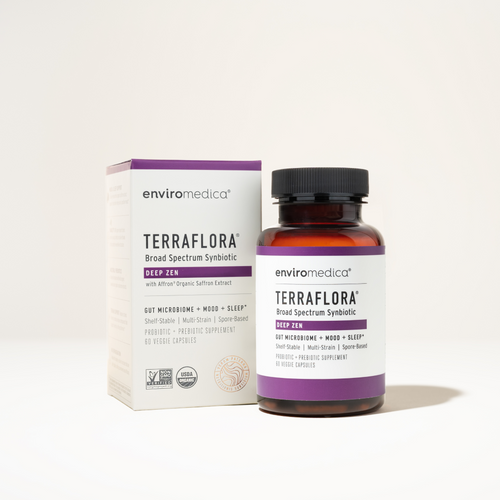

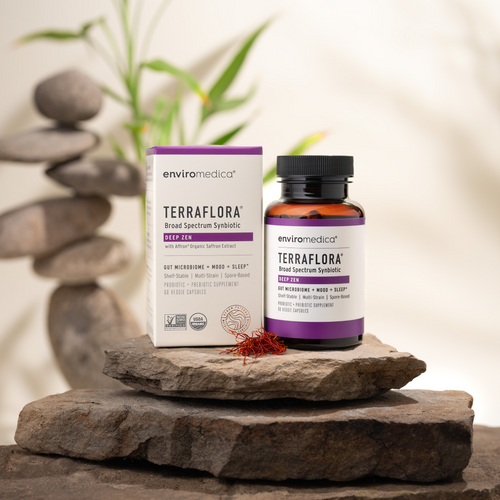
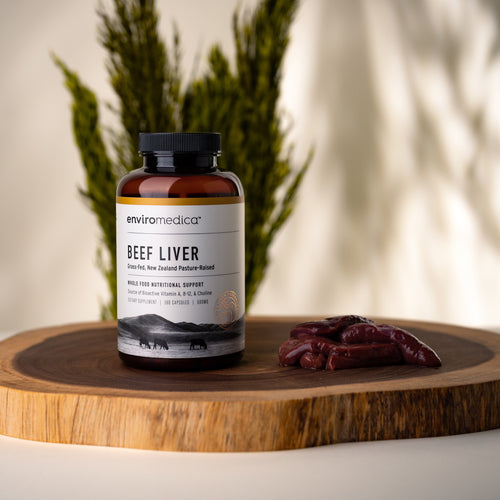

Supporting your gut microbiome is one foundational step toward sustained energy. Enviromedica's Terraflora Deep Zen combines soil-based probiotics with clinically studied ingredients to support the gut-brain axis, helping to promote a balanced stress response and sustained focus throughout the day.
References
- 1. Bass, Joseph, and Mitchell A. Lazar. “Circadian Time Signatures of Fitness and Disease.”Science, vol. 354, no. 6315, 2016, pp. 994–999.
- 2. Carabotti, Marilia, et al. “The Gut–Brain Axis: Interactions between Enteric Microbiota, Central and Enteric Nervous Systems.” Annals of Gastroenterology, vol. 28, no. 2, 2015, pp. 203–209.
- 3.Lynch, Susan V., and Oluf Pedersen. “The Human Intestinal Microbiome in Health and Disease.”New England Journal of Medicine, vol. 375, no. 24, 2016, pp. 2369–2379.
- 4.Zeevi, David, et al. “Personalized Nutrition by Prediction of Glycemic Responses.”Cell, vol. 163, no. 5, 2015, pp. 1079–1094.
- 5.Koh, Ara, et al. “From Dietary Fiber to Host Physiology: Short-Chain Fatty Acids as Key Bacterial Metabolites."Cell, vol. 165, no. 6, 2016, pp. 1332–1345.
- 6.Sonnenburg, Erica D., and Justin L. Sonnenburg. “The Industrialized Microbiota.” Science, vol. 369, no. 6510, 2019.
- 7.Fredholm, Bertil B., et al. “Actions of Caffeine in the Brain.” Pharmacological Reviews, vol. 51, no. 1, 1999, pp. 83–133.
- 8.Rook, Graham A. W. “Regulation of the Immune System by Biodiversity from the Natural Environment.” PNAS, vol. 110, no. 46, 2013.
- 9.Browne, Hilary P., et al. “Culturing of ‘Unculturable’ Human Microbiota Reveals Novel Taxa and Extensive Sporulation.”Nature, vol. 533, 2016.


