









And its function depends on the terrain it exists within
Most people think of the gut as a place where digestion happens, where food is broken down, nutrients are absorbed, and waste is eventually eliminated.
That description is not wrong, but it leaves out something far more important.
Because the gut is not simply processing food. It is continuously evaluating it, deciding what should pass through the intestinal lining and what should remain contained. Every time you eat, drink, or even swallow, your body is making a series of decisions about what belongs inside and what does not.
This process is not passive. It is highly regulated, and it depends entirely on the condition of the system carrying it out. The lining of the digestive tract is not just a barrier, but rather a dynamic interface between the external world and the internal environment of the body.1
And like any interface, its behavior is shaped by the context it operates within.
The gut reflects its environment
The gut did not develop in isolation, nor was it designed to operate in a sterile or controlled environment.
It took shape under conditions where food was less refined, water carried minerals and microbes, and daily life involved regular interaction with soil, plants, and environmental bacteria. Those inputs were not incidental, but were rather helping shape how the gut barrier functions and how it learned to distinguish between what is useful, what is neutral, and what should be excluded.
Modern conditions have altered that relationship.
Food is more processed, microbial exposure is reduced, and environmental inputs are filtered and standardized. At the same time, the underlying biology of the gut has not changed. It continues to operate as a filtration system that expects signals from a far more diverse environment than most people experience today.
The gut does not just respond to what you eat, but to the environment that surrounds it.
A filtration system, not a wall
One of the most common misunderstandings about gut health is the idea that the intestinal barrier should be completely sealed.
In reality, the gut must remain selectively permeable, allowing nutrients, electrolytes, and water to pass through while restricting substances that could disrupt internal balance.2
This balance is what defines a functional filtration system.
The gut is not meant to block everything, but rather to discriminate, constantly adjusting based on signals from the body, the microbiome, and the external environment.
This filtration process is carried out through a network of systems that include the microbiome, the mucus layer, epithelial cells, and tight junctions, all of which contribute to how selectively the gut functions.
How the filtration system is built
The gut barrier is not a single structure, but a layered system working in coordination.
The microbial layer
The microbiome forms the first point of interaction between what you consume and the body itself. These microbes compete with pathogens, produce metabolites, and influence how the gut responds to incoming substances.
They are not separate from the filtration system, but are actively involved in regulating it.
The mucus layer
Above the intestinal lining sits a mucus layer that helps maintain separation between microbes and the epithelial cells. This layer traps potential pathogens while supporting beneficial microbial activity, creating a buffer that helps regulate interaction at the gut surface.
The epithelial barrier
Beneath the mucus is a single layer of epithelial cells, which are responsible for absorbing nutrients and communicating with the immune system.3
Despite their thinness, these cells play a central role in determining what enters circulation.
Tight junctions
Between these cells are tight junctions, which regulate what passes between them. These junctions are not fixed. They respond dynamically to signals from diet, microbes, and stress, adjusting permeability as needed.4
In this way, the gut is not simply open or closed, but constantly adapting.
Your gut is not just absorbing nutrients, it is continuously deciding what becomes part of you.
When filtration becomes less selective
There is a tendency to think of the gut as something that breaks, but more often it is something that adapts.
The filtration system doesn't suddenly fail, but rather shifts in response to the signals it receives.
When inputs become less diverse, the system becomes less informed and when the terrain becomes depleted, the system becomes less selective.
When these signals are inconsistent, the system is forced to become reactive rather than regulated. In that sense, what we often describe as dysfunction is not random.
It is the body continuing to respond to its environment, even when that environment no longer resembles the one it was shaped within.
This shift results in the gut becoming less precise in its filtering, which is often described as increased intestinal permeability.
This means that substances which would normally remain within the gut may begin to pass into circulation. Research has shown that disruptions in this barrier are associated with both intestinal and systemic conditions.5
The goal is not to eliminate permeability, since that would impair nutrient absorption, but rather to maintain balance so the system remains selective and responsive.
The gut as terrain
Describing the gut as a barrier captures only part of its function.
It is more accurate to think of it as a terrain, a living environment shaped by the interactions between microbes, cells, nutrients, and external inputs. This terrain determines how effectively the filtration system operates.
When the terrain is stable and diverse, the filtration system tends to function with greater precision. When the terrain becomes depleted or imbalanced, that precision can diminish.
You are not just supporting the gut barrier, but the terrain that allows the barrier to function.
The microbiome as regulator
The microbiome plays a central role in shaping how the gut barrier behaves.
Microbial balance influences tight junction function, immune signaling, and the production of compounds that help maintain barrier integrity.6
When microbial ecosystems narrow, metabolic resilience can narrow with them. Which means energy stability becomes harder to maintain.
When microbial diversity is reduced, those regulatory signals can shift, affecting how selective the filtration system becomes.
Supporting a healthy filtration system
Supporting the gut is less about forcing change and more about restoring conditions.
Microbial diversity
Exposure to beneficial microbes helps maintain balance within the gut ecosystem. Soil-based organisms, fermented foods, and natural environments all contribute to this diversity.
Structural support
The gut lining depends on structural nutrients, including amino acids such as glycine and proline, which are found in collagen-rich foods and support connective tissue throughout the body.7
Mucosal support
The mucus layer relies on microbial balance and dietary inputs such as fiber, which help maintain its protective function.
Circadian alignment
The gut responds to daily rhythms. Sleep, light exposure, and meal timing all influence microbial balance and barrier function.8
Reducing disruptive inputs
Highly processed foods, chronic stress, and environmental toxins can all influence the terrain of the gut, shifting both microbial balance and filtration behavior over time.
A systems approach
The gut does not operate in isolation. It interacts with the immune system, the nervous system, and metabolic processes. Supporting it requires thinking in systems rather than isolated interventions.
A healthy gut is not created through a single input, but through a stable and supported terrain.
The layers of your gut filtration system
To understand how the gut functions as a filtration system, it helps to visualize it not as a single barrier, but as a series of layers working together.
Each layer contributes to how selectively the system operates.

Each of these layers depends on the terrain that supports it. When the terrain is stable, the system is selective. When the terrain is disrupted, the system becomes less precise.
A wholistic view
The gut determines what enters the body and what stays out, acting as a filtration system that is deeply influenced by the environment it exists within.
Rather than viewing gut health as a matter of digestion alone, it is more accurate to see it as the maintenance of a selective, responsive interface between you and the world around you.
When the terrain is supported, the system can function as it was designed to.
Supporting the terrain that supports you
Once you begin to see the gut as a filtration system, the question shifts. It is no longer about fixing a single symptom or targeting a single function. It becomes a question of what conditions allow the system to regulate itself.
The microbiome plays a central role in that regulation.
It influences how the gut barrier behaves, how tight junctions respond, and how the immune system interprets what passes through.6
Modern environments tend to limit microbial exposure, narrowing the diversity of signals the system receives. This is where reintroducing beneficial microbes becomes meaningful.
Not as an isolated intervention, but as a way of restoring part of the terrain.
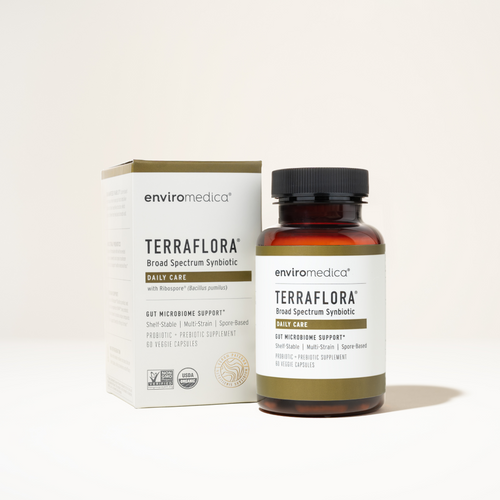
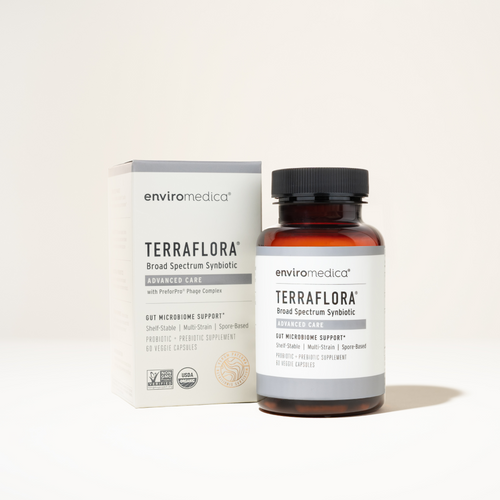
Formulated with soil-based organisms designed to survive digestion and interact with the gut environment, Terraflora reflects a different approach.
Rather than overwhelming the system and forcing change, it works with it to support the terrain that allows change to happen.
The goal is not to control the system, but to restore the conditions that allow it to regulate itself.
Frequently asked questions about the gut as a filtration system
What does it actually mean for the gut to “filter” something?
Filtration in the gut refers to selective permeability, which is the process of allowing certain substances to pass into the body while restricting others.
This is not a passive sieve. It is an active, regulated system involving multiple layers that interpret and respond to incoming inputs.
What passes through is not determined by size alone, but by biological signaling, microbial interaction, and the condition of the gut lining itself.
Is the gut supposed to be completely sealed?
No. A completely sealed gut would not function properly because it would prevent nutrient absorption.
The goal is not impermeability, but regulated permeability, where the system remains responsive and selective.
This is why the concept of balance is so important. The gut must remain open enough to absorb nutrients, but selective enough to maintain internal integrity.
Why does modern life seem to disrupt this system?
The gut developed under conditions that included constant microbial exposure, diverse foods, and environmental variability.
Modern conditions often reduce those inputs while introducing new ones such as processed foods, chronic stress, and reduced environmental diversity.
This does not mean the system is failing. It means the inputs have changed, while the underlying biology has not.
How does the microbiome influence filtration?
The microbiome acts as both a regulator and a participant in the filtration system.
It produces metabolites, influences immune signaling, and helps regulate tight junction function.
When microbial diversity is high, the system tends to be more stable and adaptive.
When diversity is reduced, signaling can become less balanced, which may affect how selectively the gut functions.
What role do soil-based organisms play?
Soil-based organisms are naturally resilient microbes that can survive environmental stressors, including stomach acid.
Because of this, they are able to reach the intestines intact and interact with the existing microbiome.
From a terrain perspective, they represent a category of exposure that was historically more common, particularly through soil, food, and water.
Their role is not to replace the microbiome, but to interact with it.
Can the gut barrier repair itself over time?
Yes. The gut lining is one of the most dynamic tissues in the body and regenerates regularly.
However, the way it regenerates depends on the inputs it receives.
Consistent signals from nutrients, microbes, and environmental factors influence whether the system rebuilds in a stable or unstable way.
Why is collagen relevant to gut filtration?
Collagen provides amino acids such as glycine and proline that support connective tissue throughout the body, including tissues associated with the gut lining.⁷
While collagen does not directly regulate permeability, it contributes to the structural components that support barrier integrity.
What is the difference between supporting the gut and supporting the terrain?
Supporting the gut often focuses on isolated symptoms or functions.
Supporting the terrain means addressing the broader system that influences how the gut behaves.
This includes:
- Microbial diversity
- Nutrient availability
- Environmental exposure
- Circadian rhythm
- Stress regulation
The terrain determines how the system responds.
How long does it take to influence the gut filtration system?
Changes in the gut can begin quickly, particularly at the level of microbial activity. However, structural and systemic changes tend to occur over longer periods.
Because the gut is constantly adapting, consistency matters more than intensity.
What is the most important takeaway?
The gut is not just a digestive organ. It is a selective interface shaped by the environment it exists within.
Supporting it is not about forcing change, but about restoring the conditions that allow it to function as designed.
DAILY GUT HEALTH






References
1. Battino, Maurizio, et al. “Intestinal Barrier and Permeability.” Nutrients, 2024.
2. Turner, Jerrold R. “Intestinal Mucosal Barrier Function.” Nature Reviews Immunology, 2009.
3.Peterson, Lance W., and David Artis. “Intestinal Epithelial Cells.” Nature Reviews Immunology, 2014.
4.Günzel, Dorothee, and Alan S. L. Yu. “Claudins and Tight Junctions.” Physiological Reviews, 2013.
5.Bischoff, Stephan C., et al. “Intestinal Permeability.” BMC Gastroenterology, 2014.
6.Chelakkot, Chithra, et al. “Microbiota and Barrier Function.” Experimental & Molecular Medicine, 2018.
7.Wu, Guoyao. “Amino Acids and Gut Function.” Amino Acids, 2009.
8.Thaiss, Christoph A., et al. “Circadian Rhythms and Microbiome.” Cell, 2016.


