







What we lost when bacteria became the enemy
For most of human history, health did not come from avoiding microbes, it came from living among them.
Yet in just over a century, our relationship with bacteria has undergone a dramatic reversal. Once seen as part of the natural world that shaped human resilience, microbes are now framed and almost exclusively as threats to be eliminated. This shift transformed medicine, public health, and daily life, but it also created unintended biological consequences that are only now coming into focus.1
As modern life grows cleaner, more controlled, and more sterile, an essential question emerges:
What happens when the environment that shaped the human microbiome disappears?
The problem when everything is too clean
The rise of modern hygiene was, in many ways, a triumph. Clean water systems, sanitation, and antibiotics dramatically reduced infectious disease and increased life expectancy.2 These advances reshaped civilization.
But progress came with a tradeoff.
Over time, the definition of "clean" expanded beyond disease prevention into total microbial elimination. Soil was removed from food production. Fermentation gave way to preservation. Outdoor play gave way to indoor living. Handwashing evolved into constant disinfection.
Modern environments are now designed to minimize microbial exposure at nearly every turn.
Food travels through sterilized supply chains. Hoses are sealed and filtered. Surfaces are disinfected daily. Even beneficial bacteria are increasingly isolated, engineered, and delivered in clinical formats far removed from their natural context.
The gut microbiome, the complex ecosystem of bacteria, fungi, and microbes that live in and on the human body, did not evolve for this environment.3
For hundreds of thousands of years, humans lived immersed in microbial richness. Soil microbes coated hands and skin. Wild foods carried environmental organisms. Water sources contained diverse microbial life. These exposures weren't accidental; they were foundational.4
When those inputs vanished, the microbiome lost more than numbers, it lost context.
How the microbiome was shaped by the natural world
Evolution does not optimize for sterility. It optimizes for adaptability.
The human immune system and gut microbiome co-evolved in environments teeming with microbial life. This constant exposure trained immune responses, shaped digestion, and supported metabolic flexibility.4,5
Microbes helped break down complex fibers. They produced enzymes and metabolites humans could not generate alone. They communicated directly with immune cells, influencing inflammation, tolerance, and response.5
Importantly, diversity, not dominance, was the defining feature.
Instead of relying on a handful of strains, ancestral microbiomes reflected wide ecological variation. Different organisms performed similar roles, creating redundancy and resilience. If one microbial population declined, others filled the gap.6
Modern life disrupted that balance.
Here's what we lost
Microbial Diversity
Microbial diversity refers to the range and balance of different microbial species within an ecosystem. In the gut, diversity is associated with stability, adaptability, and resilience.6
Historically, humans encountered thousands of microbial strains daily, through soil contact, untreated water, fermented foods, animals, and plants. These encounters expanded microbial diversity and trained immune systems to differentiate between harmless exposure and true threats.4,7
Modern environments drastically narrowed this input.
Highly processed diets, antibiotic use, pesticide exposure, chlorinated water, and constant sanitization reduce microbial variety. Instead of diverse environmental microbes, exposure becomes repetitive and limited.1
Research consistently links reduced microbial diversity with immune dysregulation, digestive disturbances, and inflammatory patterns.1,6 When diversity declines, the microbiome becomes less adaptable, and less resilient to change.
Terrain-Based Resilience
Not all microbes are equally equipped to survive the modern digestive tract.
Soil-based organisms (SBOs), also known as spore-forming bacteria, evolved in dynamic and often harsh environments. To survive heat, oxygen exposure, desiccation, and acidity, these organisms form protective spores that allow them to remain dormant until conditions are favorable.8
This evolutionary trait is critical.
Spore-forming bacteria can withstand stomach acid, bile, and digestive enzymes without refrigeration or synthetic encapsulation. They arrive in the gut intact, ready to interact with the existing microbiome.8
Many conventional probiotics rely on fragile lab-cultured strains that require refrigeration, specialized capsules, or precise storage conditions. Survival becomes a technological challenge rather than a biological feature.3
For most of human history, resilience was built into the organism itself.
Ancestral Microbial Memory
The human genome carries the imprint of microbial partnership.
Certain microbes supported fiber fermentation. Others assisted in enzyme production, vitamin synthesis, and immune signaling. These relationships were not optional; they were integral to how humans extracted nourishment and adapted to varied diets and environments.5
As environmental microbes disappeared, many of these interactions weakened.
This loss extends beyond digestion. Microbes play a role in signaling between the gut and immune system, influencing inflammatory balance and immune education.4,9 When ancestral microbial exposures vanish, the body loses reference points it once relied on to interpret its environment.
The result is not simply fewer microbes, but a system operating without historical context.
The hygiene hypothesis and the cost of over-sanitization
Scientists began noticing this shift decades ago.
The hygiene hypothesis proposes that reduced exposure to environmental microbes, particularly early in life, may impair immune development.7 Children raised in microbially rich environments, such as farms, consistently show lower rates of immune dysregulation than those raised in highly sanitized settings.4,7
This does not mean hygiene is harmful. It means imbalance is.
Human biology expects microbial input. When that input disappears, immune systems lack the training required to calibrate responses appropriately.4,9
Modern sanitization solved infectious disease, but it also removed ecological signals that helped regulate immune behavior.
Why rewilding the gut matters
Rewilding the gut does not mean abandoning hygiene or returning to unsafe practices. It means restoring ecological complexity where it has been stripped away.
Rewilding focuses on:
- Increasing microbial diversity6
- Supporting resilient, environmentally adapted organisms8
- Reintroducing inputs the body recognizes4
- Shifting from control to balance
Rather than overwhelming the gut with isolated strains, rewilding emphasizes cooperation between microbes, diet, and environment.5
This approach reflects how the microbiome evolved, not as a supplement protocol, but as an ecosystem.
This is why Enviromedica exists
Enviromedica was founded on a simple premise:
The body recognizes what it evolved alongside.
Rather than replicating what modern labs synthesize, Enviromedica focuses on restoring what modern life removed. This philosophy shapes every formulation.
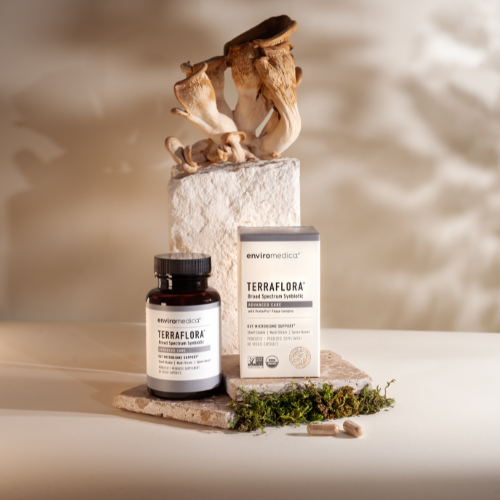
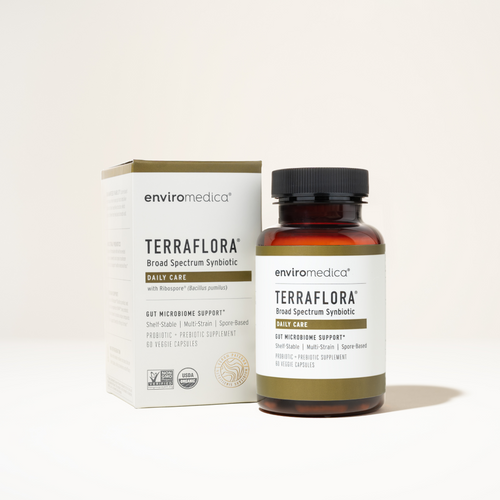
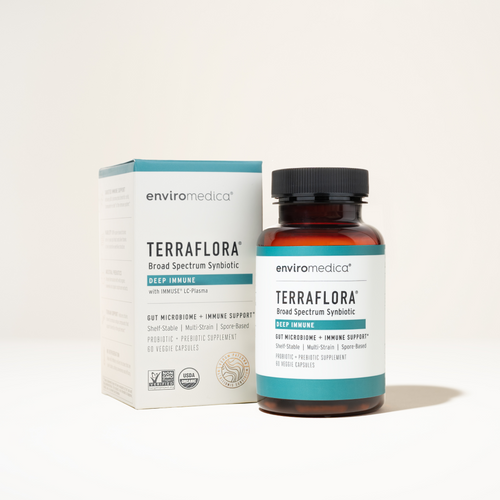
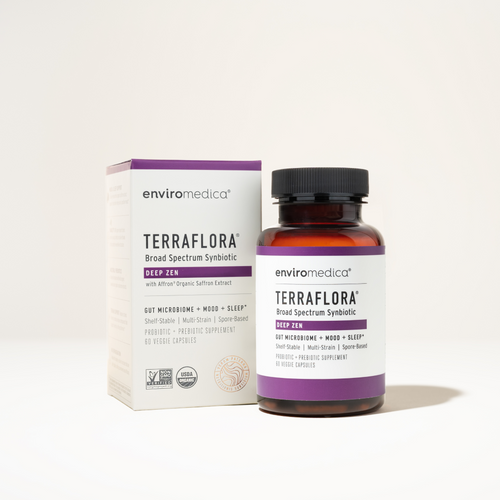
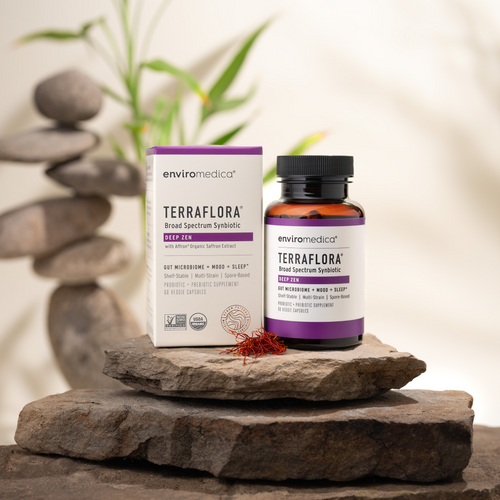
Terraflora® was developed to support microbial diversity through resilient soil-based organisms, organisms designed by nature to survive environmental extremes and arrive intact in the gut.8
These organisms are paired with whole-food and wild-harvested ingredients that mirror ancestral exposure, rather than isolated synthetic inputs.5
This approach is not driven by trends. It is driven by biological logic.
Human health emerged from interaction with living systems, not sterile isolation.
Rewilding is not regression, it's restoration
Modern science often frames progress as moving away from the past. But biology tells a more nuanced story.
The goal is not to reject modern advances, but to integrate them with evolutionary context.
Rewilding the gut is not about undoing progress. It's about restoring balance between modern life and ancient biology.
Clean environments may protect us from pathogens, but resilient microbiomes protect us from imbalance.1,6
And resilience was never built in sterile conditions.
Restore what was lost
Rewild your gut. Restore your health.
FAQs
What does it meant to "rewild the gut?"
Rewilding the gut refers to restoring microbial diversity that has been lost through modern living. This includes reintroducing resilient, environmentally derived microbes that humans historically encountered through soil, food, and outdoor exposure. Rather than focusing on a few isolated strains, rewilding emphasizes ecological balance, diversity, and functional resilience within the gut microbioime.
Why is microbial diversity more important than the number of probiotics?
A healthy microbiome functions as a complex ecosystem, not a monoculture. Microbial diversity allows different organisms to perform overlapping roles, supporting digestions immune signaling, and metabolic processes. Low diversity has been associated with reduced resilience, while higher diversity supports adaptiability in response to diet, stress, and environmental change.
What are soil-based organisms?
Soil-based organisms (SBOs) are naturally occurring, spore-forming bacteria found in soil and traditional food environments. Unlike many lab-cultured probiotic strains, SBOs form protective spores that allow them to survive heat, oxygen exposure, and stomach acid. This resilience enables them to reach the gut intact without the need for refrigeration or synthetic delivery systems.
How are soil-based probiotics different from conventional probiotics?
Most conventional probiotics rely on fragile bacterial strains that must be refrigerated or encapsulated to survive digestion. Soil-based probiotics contain spore-forming organisms that evolved to withstand harsh environments. This natural resilience reflects the way humans historically encountered microbes, through food and soil, rather than through isolated laboratory cultures.
Is modern cleanliness harmful to gut health?
Cleanliness itself is not the problem. The issue arises when constant sterilization eliminates beneficial microbial exposure. Research suggests that reduced contact with environmental microbes may contribute to decreased microbial diversity and immune dysregulation. A balance between hygiene and microbial exposure appears essential for long-term resilience.
Did humans really evolve alongside soil microbes?
Yes. For most of human history, daily life involved direct contact with soil, plants, animals, and untreated water. These environments shaped both the human immune system and the gut microbiome. Many microbial relationships developed during this time supported digestion, nutrient metabolism, and immune regulation; functions still relevant today.
Can diet alone restore microbial diversity?
Diet plays a critical role in supporting existing microbes, particularly through fiber and whole foods. However, if certain microbial groups are missing, food alone may not reintroduce them. Historically, microbial exposure came from both diet and environment. Modern approaches to rewilding often consider both nourishment and microbial reintroduction.
Are soil-based probiotics safe for daily use?
Soil-based organisms have been part of the human microbial environment for millennia. Modern formulations use carefully selected and studied strains designed for consistency and safety. As with any dietary supplement, individuals should consult a healthcare professional if they have specific health conditions or concerns.
How does Terraflora support microbial diversity?
Terraflora is formulated to reflect ancestral microbial exposure by combining resilient soil-based organisms with supportive whole-food inputs. Rather than overwhelming the gut with isolated strains, it is designed to complement the existing microbiome and support diversity through ecological balance.
How long does it take to notice changes in the gut microbiome?
Microbial ecosystems adapt gradually. Some people notice digestive or comfort-related changes within weeks, while deeper shifts in diversity and resilience occur over time. The gut microbiome responds dynamically to diet, environment, and lifestyle, making consistency more important than speed.
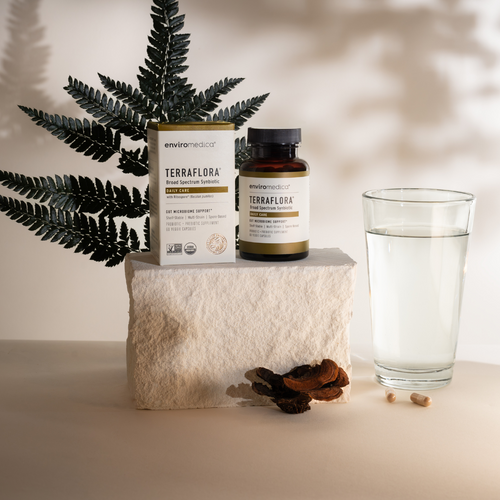
DAILY GUT HEALTH
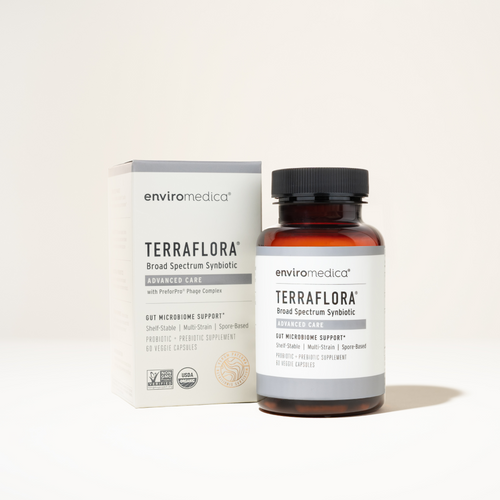
GUT HEALTH + IMMUNE SUPPORT
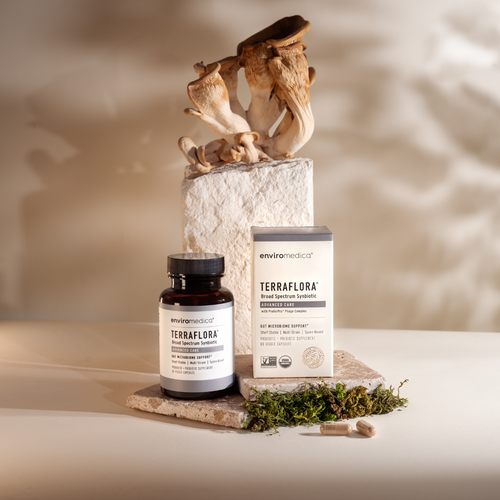
MOOD + SLEEP SUPPORT
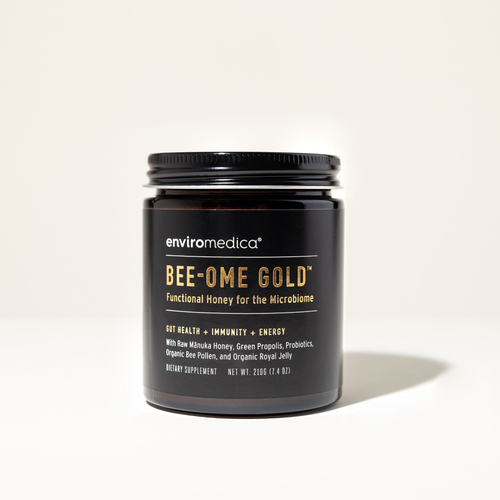
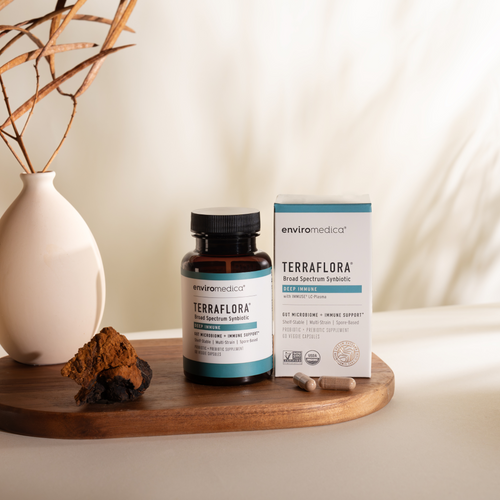
GUT HEALTH + ENERGY + IMMUNITY
References
- 1. Blaser, Martin J. Missing Microbes: How the Overuse of Antibiotics Is Fueling Our Modern Plagues. Henry Holt and Company, 2014.
- 2.Centers for Disease Control and Prevention. “Achievements in Public Health, 1900–1999.” MMWR, 1999.
- 3.Sonnenburg, Erica D., and Justin L. Sonnenburg. The Good Gut. Penguin Press, 2015.
- 4.Rook, Graham A. W. “Regulation of the Immune System by Biodiversity from the Natural Environment.” PNAS, vol. 110, no. 46, 2013.
- 5.Sonnenburg, Justin L., et al. “Diet-Induced Extinctions in the Gut Microbiota.” Nature, vol. 529, 2016.
- 6.Vandeputte, Doris, et al. “Quantitative Microbiome Profiling Links Gut Community Variation to Microbial Load.” Nature, vol. 551, 2017.
- 7.Haahtela, Tari, et al. “The Biodiversity Hypothesis and Allergic Disease.” World Allergy Organization Journal, 2013.
- 8.Browne, Hilary P., et al. “Culturing of ‘Unculturable’ Human Microbiota Reveals Novel Taxa and Extensive Sporulation.” Nature, vol. 533, 2016.
- 9.Rook, Graham A. W., et al. “Microbial ‘Old Friends,’ Immunoregulation and Stress Resilience.” Evolution, Medicine, and Public Health, 2014.


