







Why survival, not just strain count, determines whether a probiotic works
Probiotics have become one of the most widely used supplements for gut health.
Walk into any health store or browse online and you’ll find hundreds of options promising digestive support, microbiome balance, immune benefits, and more. Most labels highlight one number above all else: CFUs, or colony-forming units, which is the amount of bacteria in the capsule.
But there’s a critical question most probiotic labels don’t answer:
How many of those bacteria actually survive the journey through your digestive system?
Because if probiotic organisms cannot survive stomach acid, bile salts, and digestive enzymes, the number printed on the label becomes far less meaningful.
A probiotic only works if the organisms survive the journey to your gut.
This is one of the reasons researchers increasingly emphasize that not all probiotics function the same way in the body.1
Some strains are fragile. Others are resilient. Some die before reaching the intestines. Others arrive intact and interact with the existing microbiome.
Understanding these differences can help you make a far more informed decision when choosing a probiotic.
If you’re considering adding a probiotic to your routine, here are four essential things to understand before you buy.
1. Not all probiotics survive the digestive tract
The human digestive system is intentionally hostile to microbes.
Stomach acid can reach a pH as low as 1.5–3.5, a level strong enough to break down proteins and destroy many microorganisms.2 Bile salts and digestive enzymes further challenge microbial survival as contents move through the small intestine.
For probiotic bacteria to have any meaningful interaction with the gut microbiome, they must first survive these conditions.
However, many traditional probiotic strains, particularly common Lactobacillus and Bifidobacterium species, are relatively fragile. Exposure to heat, oxygen, moisture, and stomach acid can significantly reduce their viability before they ever reach the intestines.3
This doesn’t mean these strains are ineffective. Some can still provide benefits under the right conditions. But it does mean their success often depends heavily on formulation methods such as:
- Refrigeration
- Enteric coatings
- Delayed-release capsules
- Protective encapsulation technologies
Without these protections, a significant portion of probiotic organisms may not survive long enough to reach the gut ecosystem.
This is why probiotic survival (not just probiotic quantity) is a critical consideration.
The number on the label matters much less than how many microbes actually reach your intestines alive.
2. Spore-forming probiotics are built to survive
While many probiotics rely on protective technologies, spore-forming bacteria evolved a different strategy entirely.
Certain soil-derived bacterial species, often belonging to the genus Bacillus, form protective structures known as endospores. These spores act like biological armor, allowing the organism to survive extreme environmental conditions, including heat, oxygen exposure, dehydration, and acidity.4
In their spore state, these organisms remain dormant and highly resilient.
Once they reach a more favorable environment, such as the intestines, they can germinate into active cells.
Because of this evolutionary adaptation, spore-forming probiotics are uniquely suited to survive the digestive tract. Studies examining spore-forming bacterial species have shown they can withstand gastric conditions and reach the intestines in a viable state.4,5
This survival advantage is one reason spore-forming probiotics have attracted growing interest in microbiome research.
Instead of relying solely on manufacturing techniques to protect fragile organisms, spore-forming bacteria carry their protection with them.
Spore-forming probiotics don’t rely on special coatings. they evolved to survive.
3. Colonization and interaction matter more than temporary passage
Many probiotic organisms pass through the digestive tract without permanently colonizing the gut.
This is not necessarily a problem. Even transient microbes can influence microbial signaling, metabolic activity, and immune responses while they are present.6
However, the degree to which probiotics interact with the existing microbiome varies significantly between strains.
Some microbes may simply move through the digestive system. Others may actively participate in microbial ecosystems, producing metabolites, interacting with resident microbes, or influencing microbial balance.
Spore-forming organisms appear particularly interesting in this regard. Some research suggests these organisms may interact dynamically with existing microbial communities and influence microbial diversity or metabolic activity while present.7
In other words, effectiveness isn’t determined solely by how many bacteria you swallow.
It’s determined by whether those organisms arrive alive and interact meaningfully with the microbial ecosystem already living inside you.
4. Microbial diversity matters more than mega-dose numbers
Probiotic marketing often focuses on increasingly large CFU counts: 50 billion, 100 billion, or more.
But emerging microbiome research suggests that diversity and ecological balance may matter more than simply adding massive quantities of a few strains.8
The human gut microbiome functions more like a rainforest than a monoculture. Thousands of microbial species interact to perform overlapping metabolic functions that support digestion, nutrient metabolism, and immune signaling.
When diversity declines, ecosystem resilience can decline as well.
Modern lifestyles, characterized by processed diets, antibiotics, sanitized environments, and limited environmental microbial exposure, have been associated with reductions in microbiome diversity in industrialized populations.9
Because of this, some probiotic strategies focus less on overwhelming the microbiome with large numbers of fragile organisms and more on supporting microbial ecosystem balance.
Resilient organisms capable of surviving digestive conditions may play a role in supporting these ecosystems.
Why spore-forming probiotics are often missing from mainstream blends
Despite their resilience, spore-forming probiotics are surprisingly underrepresented in many commercial probiotic formulas.
One reason is historical.
Traditional probiotic research focused heavily on lactic acid bacteria, particularly Lactobacillus and Bifidobacterium, which were among the first strains studied for fermented foods and gut health.
These strains remain important and widely researched.
However, as microbiome science has advanced, researchers have begun exploring a broader range of microbial species, including spore-forming bacteria commonly found in soil and environmental ecosystems.
These organisms appear to represent a natural component of the microbial exposures humans historically encountered through food, soil contact, and outdoor environments.
While modern life dramatically reduced those exposures, interest in these organisms has increased as scientists explore their potential roles within microbial ecosystems.
What to look for in an effective probiotic
When evaluating a probiotic, the goal is not simply to choose the product with the biggest number on the label.
Instead, consider asking four key questions:
1. Can the organisms survive stomach acid?
Look for strains or formulations designed to withstand gastric conditions.
2. Does the probiotic include resilient strains?
Spore-forming organisms may have natural survival advantages.
3. Is the product focused on ecosystem support?
A healthy microbiome functions as a diverse ecosystem, not just a collection of isolated strains.
4. Is the formula transparent about strains and research?
High-quality probiotic products identify specific strains and provide information about their characteristics.
The bigger picture: supporting the microbial ecosystem
Probiotics are only one piece of the microbiome puzzle.
Diet, environment, lifestyle, and microbial exposure all influence the health and diversity of the gut microbiome.
For example:
- Fiber-rich foods feed beneficial microbes.10
- Environmental microbial exposure may influence microbial diversity. 11
- Highly processed diets have been associated with altered microbiome composition.9
A well-chosen probiotic can complement these factors, but it cannot replace them.
The goal is not to micromanage your microbiome with a single supplement.
It’s to support the broader microbial ecosystem your body evolved with.
The bottom line
The probiotic aisle can feel overwhelming, but one simple principle can help guide your decision:
A probiotic only works if it survives the journey to your gut.
That’s why survival matters as much as strain count, and why resilient organisms like spore-forming bacteria are gaining attention in microbiome science.
When evaluating probiotics, look beyond the CFU number.
Ask whether the organisms can survive digestion, interact with the microbiome, and support the microbial ecosystem that helps regulate digestion, metabolism, and immune function.
Because the most effective probiotic isn’t necessarily the one with the biggest number.
It’s the one that actually makes it to where it’s needed.
The best probiotic isn’t the one with the biggest CFU number. It’s the one that actually reaches your gut.
Frequently asked questions about probiotics
Do most probiotics survive stomach acid?
Not always. Many probiotic strains, especially common Lactobacillus and Bifidobacterium species, are sensitive to heat, oxygen, and stomach acid. Without protective technologies such as enteric coatings or refrigeration, a portion of these organisms may not survive long enough to reach the intestines.
What are spore-forming probiotics?
Spore-forming probiotics are bacteria that naturally produce protective structures called endospores. These spores allow the organism to survive harsh environmental conditions (including stomach acid and digestive enzymes) until they reach the intestines, where they can become metabolically active.
Are higher CFU counts better?
Not necessarily. While CFU counts measure the number of viable organisms in a product, effectiveness also depends on whether those organisms survive digestion and interact with the gut microbiome. A probiotic with fewer but more resilient strains may sometimes reach the intestines more effectively than a high-dose product containing fragile organisms.
Can probiotics permanently colonize the gut?
Most probiotic strains do not permanently colonize the gut. Instead, they typically interact with the existing microbiome while passing through the digestive tract. These interactions can still influence microbial activity, metabolite production, and ecosystem balance during their presence.
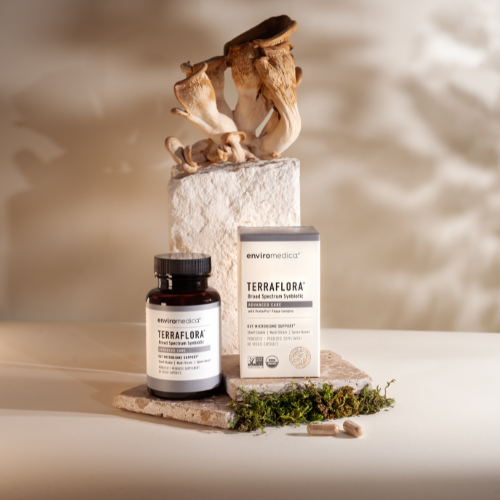
DAILY GUT HEALTH
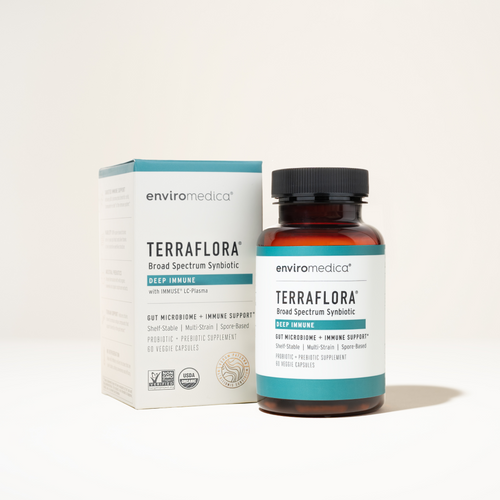
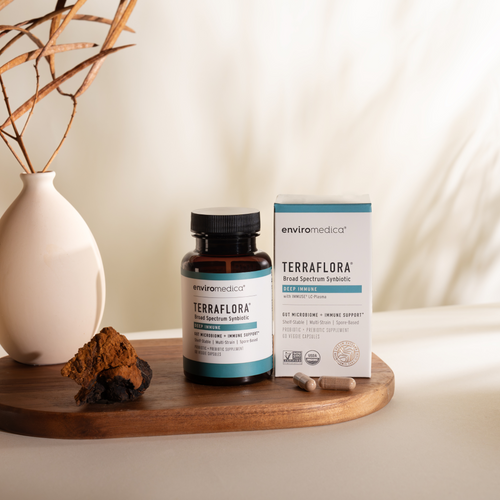
GUT HEALTH + IMMUNE SUPPORT
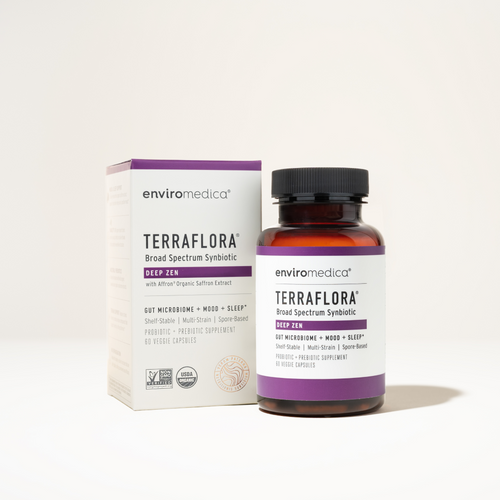
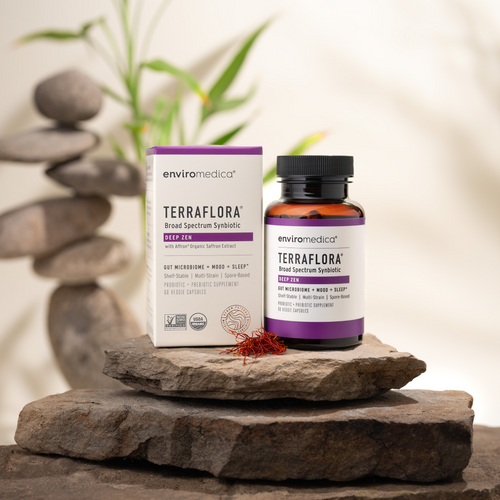
MOOD + SLEEP SUPPORT
GUT HEALTH + ENERGY + IMMUNITY
References
- 1. Hill, Colin, et al. “Expert Consensus Document: The International Scientific Association for Probiotics and Prebiotics Consensus Statement on the Scope and Appropriate Use of the Term Probiotic.” Nature Reviews Gastroenterology & Hepatology, vol. 11, no. 8, 2014, pp. 506–514.
- 2. Dressman, Jennifer B., et al. “Upper Gastrointestinal (GI) pH in Young, Healthy Men and Women.” Pharmaceutical Research, vol. 7, no. 7, 1990, pp. 756–761.
- 3.Tripathi, Mukesh Kumar, and Santosh K. Giri. “Probiotic Functional Foods: Survival of Probiotics during Processing and Storage.” Journal of Functional Foods, vol. 9, 2014, pp. 225–241.
- 4.Hong, H. A., et al. “The Use of Bacterial Spore Formers as Probiotics.” FEMS Microbiology Reviews, vol. 29, no. 4, 2005, pp. 813–835.
- 5.Cutting, Simon M. “Bacillus Probiotics.” Food Microbiology, vol. 28, no. 2, 2011, pp. 214–220.
- 6.Derrien, Muriel, and Willem M. de Vos. “Probiotics and Prebiotics: Effects on Microbial Ecology.” Current Opinion in Microbiology, vol. 14, no. 3, 2011, pp. 291–298.
- 7.Elshaghabee, Fahad M. F., et al. “Bacillus as Potential Probiotics.” Food Microbiology, vol. 36, no. 2, 2013, pp. 185–194.
- 8.Lozupone, Catherine A., et al. “Diversity, Stability and Resilience of the Human Gut Microbiota.” Nature, vol. 489, 2012, pp. 220–230.
- 9.Sonnenburg, Erica D., and Justin L. Sonnenburg. “The Industrialized Microbiota.” Science, vol. 369, no. 6510, 2019.
- 10.Koh, Ara, et al. “From Dietary Fiber to Host Physiology: Short-Chain Fatty Acids as Key Bacterial Metabolites.” Cell, vol. 165, no. 6, 2016.
- 11.Rook, Graham A. W. “Regulation of the Immune System by Biodiversity from the Natural Environment.” Proceedings of the National Academy of Sciences, vol. 110, no. 46, 2013.


